
Industry
Construction & Facilities
There is no single source of truth, and the truth is expensive.
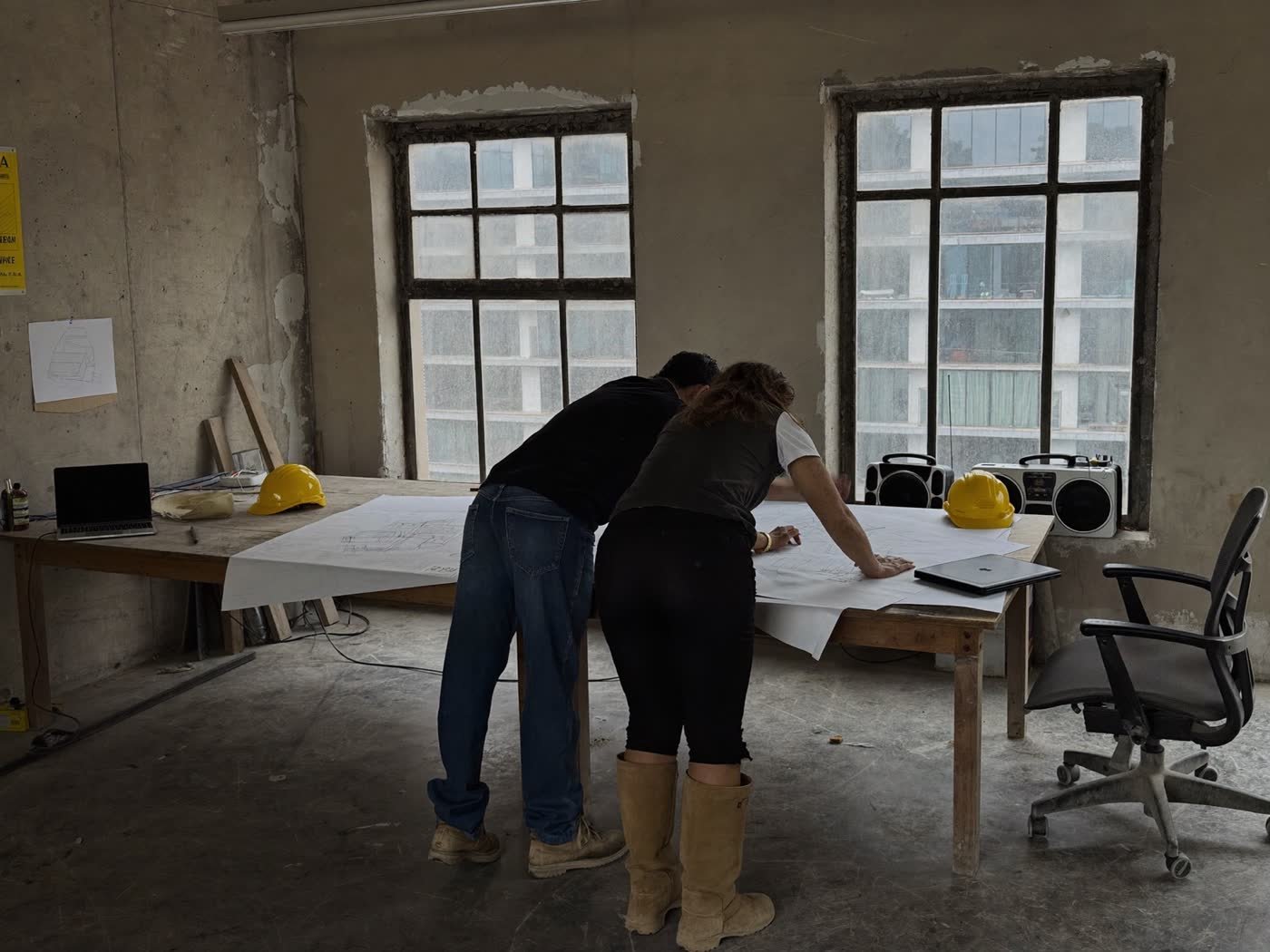
Site information lives in photographs, WhatsApp threads, PDFs, spreadsheets and voice notes.
The friction
Where the hours actually go.
Information is scattered by default
The delivery delay is known on site hours or days before it is known in the office.
Documentation is reconstructed later
Variations, instructions and site conditions are pieced together retrospectively — usually during a dispute.
Reactive maintenance dominates
Requests arrive by email and phone, get triaged by whoever is available, and are tracked in a spreadsheet.
Nobody can answer across projects
'Which sites have overdue deliveries' requires calling each site manager.
The opportunity
What we would build, and in what order.
Sequenced by return, not by how interesting the technology is.
- 01Workflow Automation
Consolidate site communication
Structured capture from the channels crews actually use, written into a project record rather than lost in a thread.
- 02Business Intelligence
Query across every project
Overdue deliveries, open variations and schedule risk answerable in one question across the portfolio.
- 03AI Agents
Triage maintenance requests
Location, issue, priority and access extracted from a plain-language request, ticket created and a technician assigned by availability and skill.
- 04Document & Finance
Capture documentation at the point of work
Photographs, instructions and sign-offs indexed against the project when they happen, not reconstructed afterwards.
Sector constraints
What we design around in this industry.
These are not caveats added at the end. They shape the scope from the first workshop.
- Safety-critical instructions are never issued automatically
- Statutory inspection and certification records keep a named human owner
- Contractual variations are prepared for authorisation, never committed by the system
The system
What this looks like running in construction & facilities.
A worked example, sized for a business of this shape.
- Active sites
- 7
- Captured from site channels
- 1,304
- Days to management view
- 0
this month
was 4
| Site | Issue | Raised | State |
|---|---|---|---|
| Eastgate Phase 2 | Steel delivery 6 days late | WhatsApp, 07:14 | Critical |
| Harbour Court | Variation instructed verbally | Voice note | Needs authorisation |
| Mill Lane | Groundworks complete | Photo, indexed | Documented |
| Kestrel Park | Access restricted Friday | Message | Schedule risk |
Safety-critical instructions are never issued automatically. Statutory inspection records keep a named human owner and variations are prepared for authorisation.
Playbooks
Detailed implementations for construction & facilities.
Each one carries a concrete scenario, what gets built, the metric that tells you it worked, and the boundary that stays with a person.

There is no single source of truth, and the truth is expensive.
Construction & Facilities · what is actually changing
Questions from this sector
Fair challenges.
Our site teams will not use a new app.
Correct, and that is the most common reason these projects fail. We start from the channels they already use rather than asking for behaviour change, because adoption is the constraint — not capability.
Can this work across subcontractors?
Yes, and that is usually where the value concentrates, since the visibility gap is worst at organisational boundaries. It does need agreement on what gets shared, which is a commercial conversation as much as a technical one.
Is this your business?
The assessment takes eleven questions and scores where your opportunity actually concentrates. It runs in your browser and shows its arithmetic.
Find my AI opportunities